



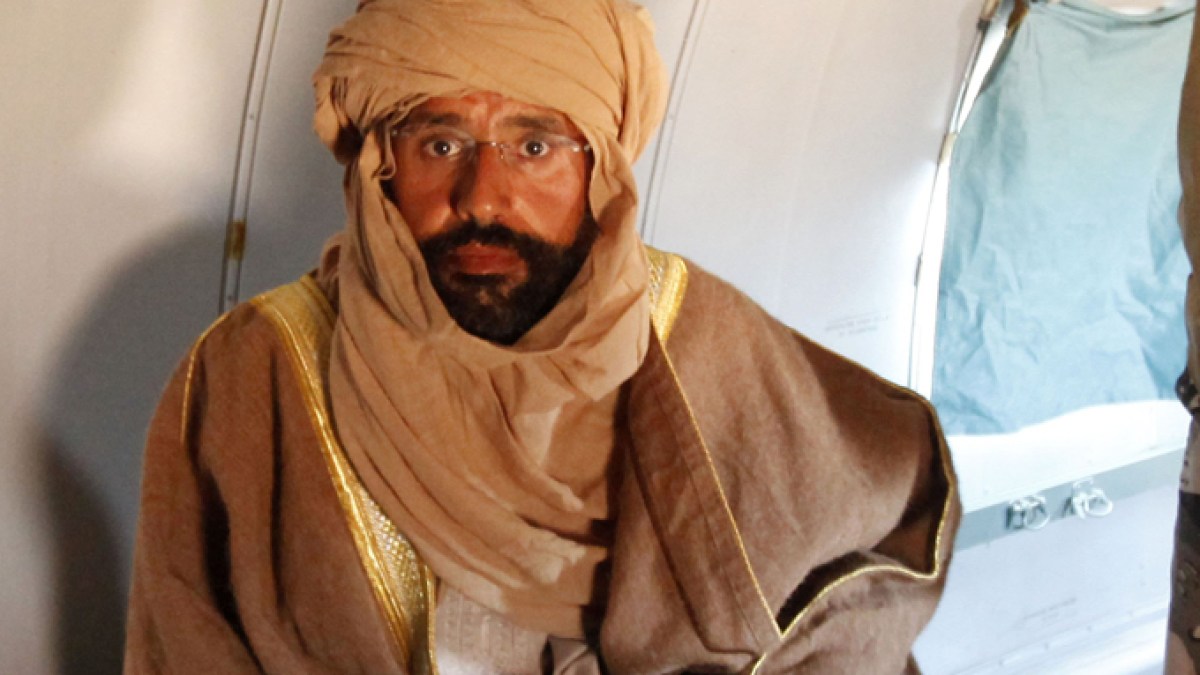
Saif al-Islam Gaddafi, son of Libya’s late longtime ruler Muammar Gaddafi and once widely viewed as his political heir, has been killed in the northwestern city of Zintan. He was 53.
The death was confirmed on Tuesday by his adviser, Abdallah Othman Abdurrahim, through a social media post, though official authorities initially released no details.
Family members later said Saif al-Islam was killed inside his residence by unidentified gunmen, an incident that has drawn renewed attention to Libya’s prolonged political instability.
Speaking to Libyan broadcaster al-Ahrar, his cousin, Hamid Gaddafi, said the family had been informed that Saif al-Islam had “fallen as a martyr.” Abdurrahim further disclosed that four armed men stormed his home after disabling surveillance cameras and shot him before fleeing the scene.
The killing reportedly occurred in Zintan, a mountainous city where Saif al-Islam had been held by local militias following the 2011 uprising that led to the overthrow of his father.
Read Also:
2025 in Memoriam: Nigerians and Global Icons Who Left a Lasting Legacy
Saif al-Islam was captured in southern Libya in November 2011 and later became the subject of an arrest warrant issued by the International Criminal Court over allegations linked to the violent suppression of protests.
In 2015, a Libyan court sentenced him to death in a controversial trial, but he was later released under an amnesty law. His whereabouts remained largely unclear for several years.
In 2021, he re-emerged in the public eye after registering as a presidential candidate in Libya’s long-delayed elections, which were eventually postponed indefinitely due to legal and political disputes.
Analysts say his death could have far-reaching implications. Libya expert Emadeddin Badi described Saif al-Islam as a deeply polarising figure whose possible return to power had become a major point of contention in the stalled electoral process.
His killing, Badi noted, could reshape political alignments ahead of any future elections.
Educated in Libya and abroad, Saif al-Islam was long portrayed as a reform-minded figure and was widely seen as his father’s preferred successor before the Arab Spring.
Although he never held formal public office, he was often described as a de facto power broker in the years preceding the 2011 revolt.
Libya has remained mired in instability since the fall of the Gaddafi regime, with the country divided between a UN-backed government in Tripoli and rival authorities in the east aligned with military commander Khalifa Haftar.
Piece of writing writing is also a fun, if you
know afterward youu can write or ekse iit is complicated to
write.