

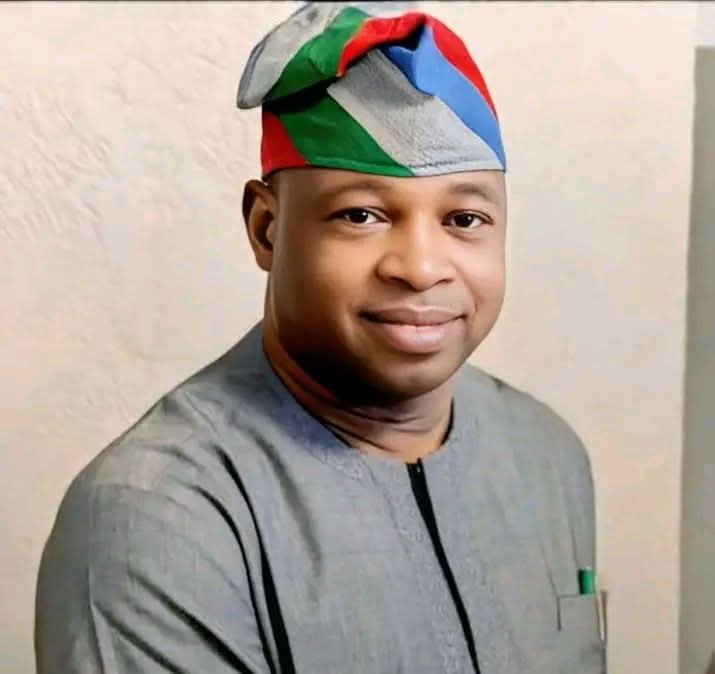
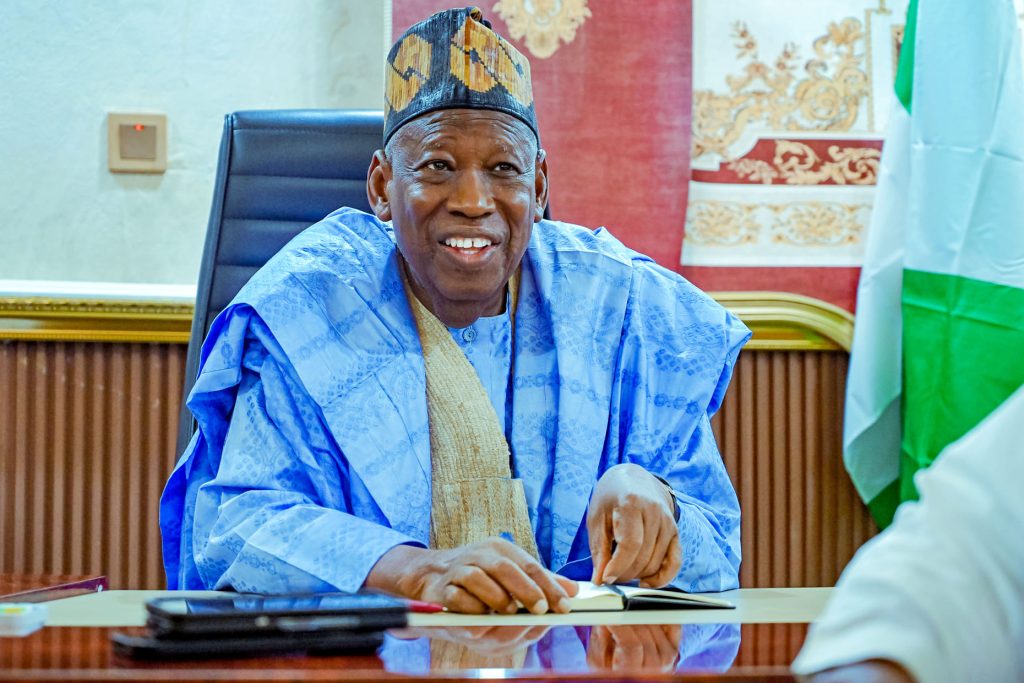
Umar Idris Shuaibu, Kano
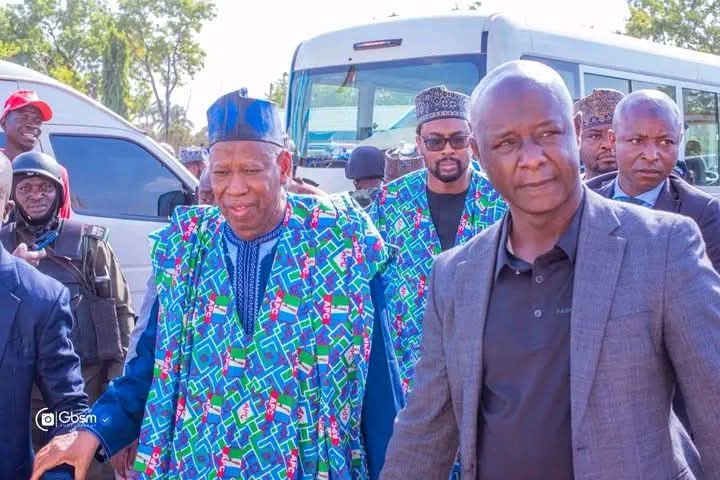
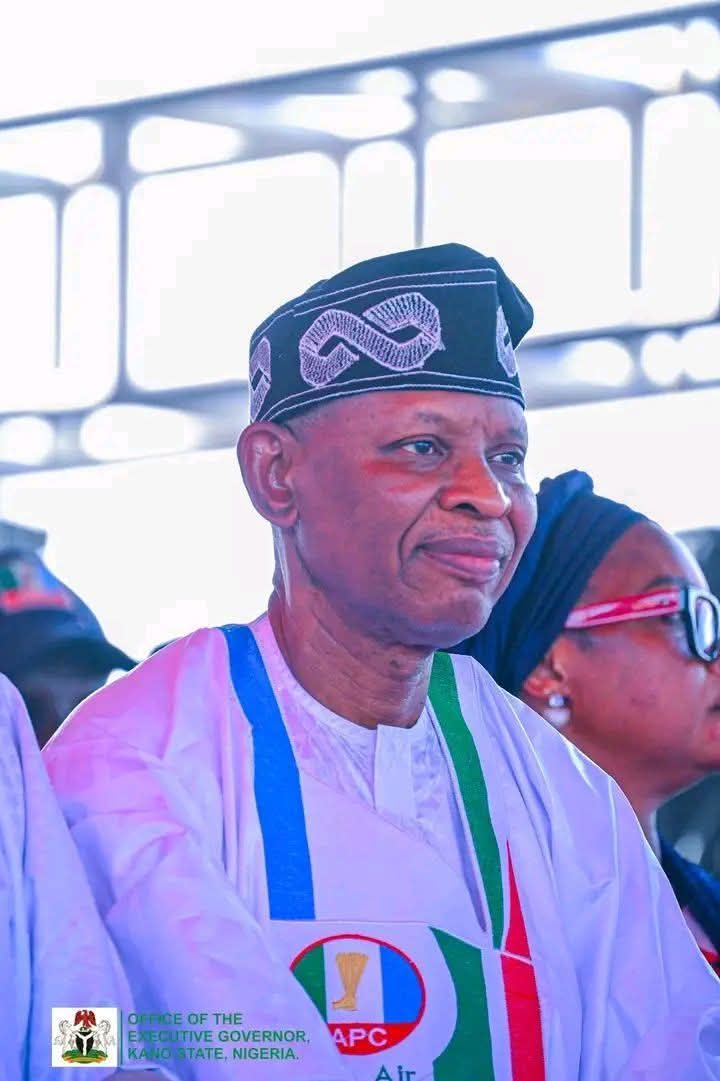
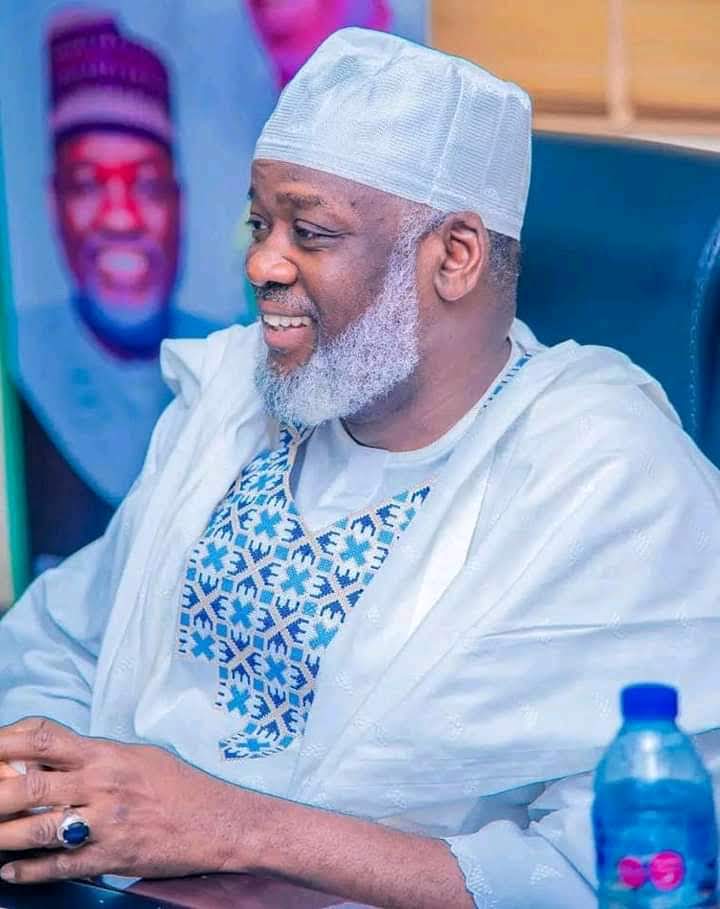
The immediate past National Chairman of the All Progressives Congress (APC) and Chairperson of the Board of the Federal Airports Authority of Nigeria (FAAN), Dr. Abdullahi Umar Ganduje, has described the recent defection of the Kano State Government to the APC as a deliberate and strategic decision aimed at aligning the state with the Federal Government to accelerate development and improve the welfare of its people.
Speaking in an interview with the editor ‘The Historica Nigeria‘ Umar Idris Shuaibu in Abuja, Dr. Ganduje said the Kano State Government’s decision to join the APC reflects a growing realization that the ruling party remains the most viable platform for sustainable governance in Nigeria.
According to him, the APC is not only expanding in numbers but also attracting what he described as “quality followers” across the country.
“The Kano State Government has seen clearly that the APC is a living party, a party that is increasing in followers, and not just in numbers but in quality,” Ganduje said.
Dr. Ganduje traced the political developments in Kano to the aftermath of the 2023 general elections, noting that the APC’s loss of the governorship paved the way for the emergence of the New Nigeria Peoples Party (NNPP) administration, which he said soon descended into internal crises.
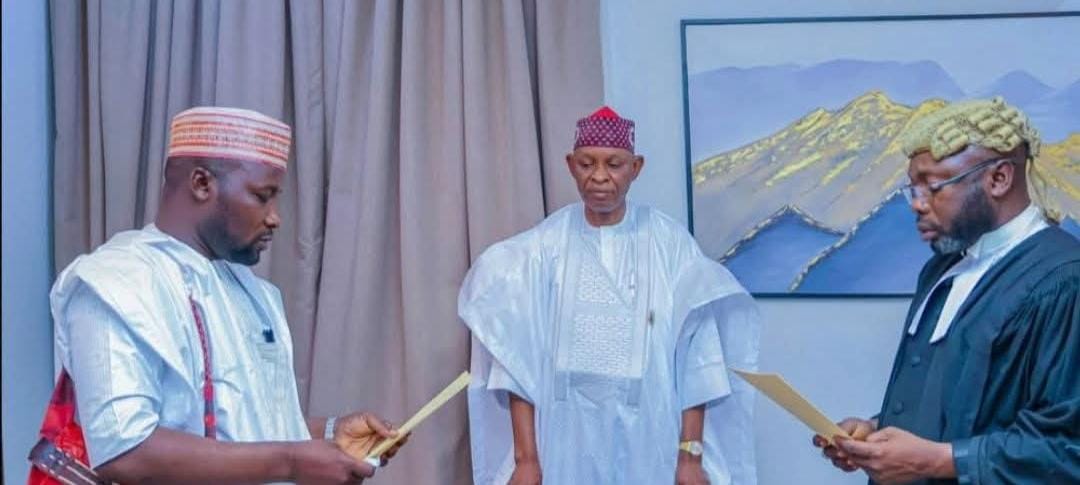
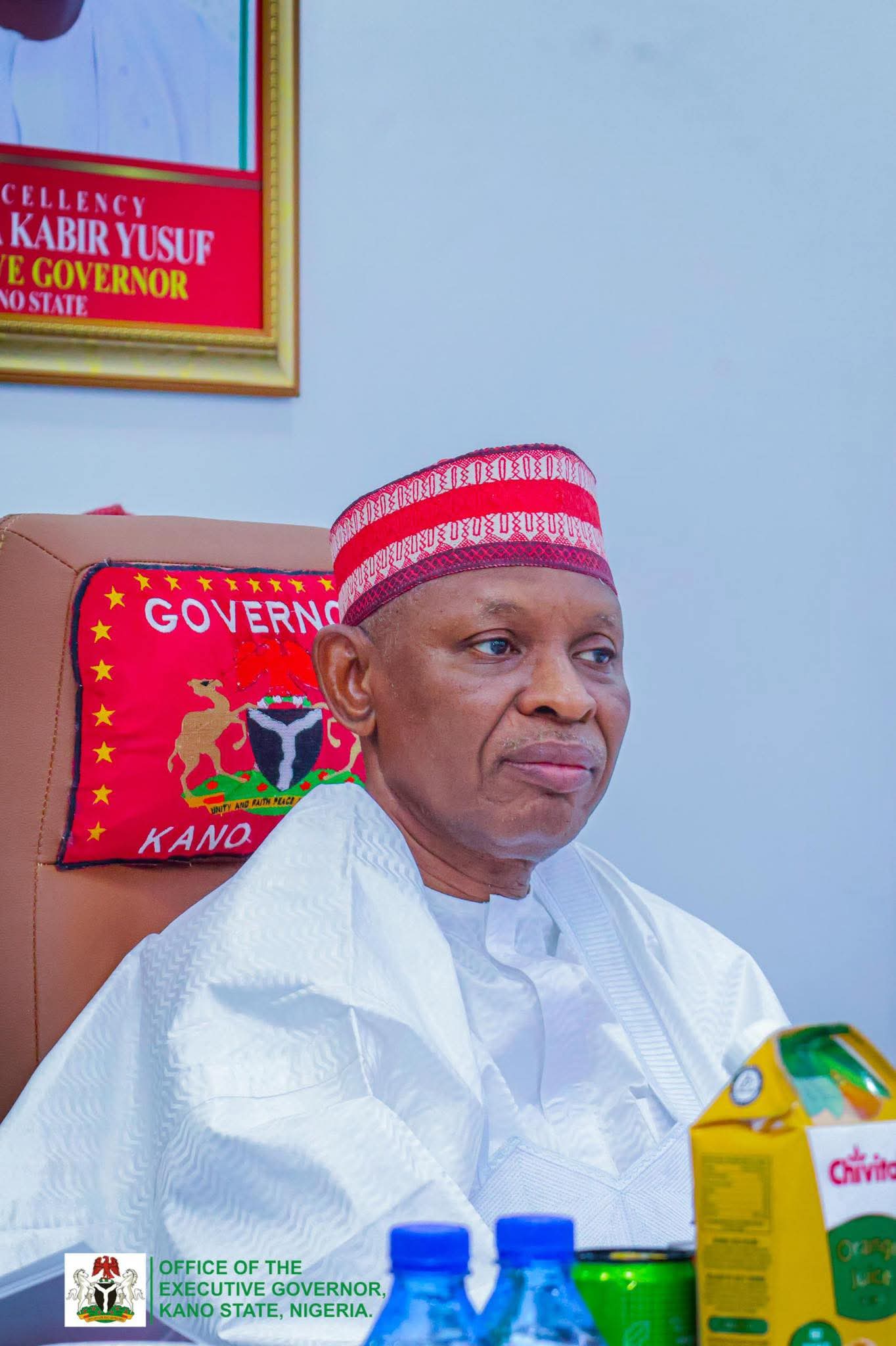
He explained that persistent disagreements, litigations, and factional conflicts within the NNPP eventually weakened the party, prompting Governor Abba Kabir Yusuf, “in his wisdom,” to defect to the APC.
Read Also:
Coups, Counter-Coups and the Cost to Nigeria
Ganduje Commissions Zero-Emission Electric Vehicles at Nnamdi Azikiwe International Airport
FG Set to End HND–Degree Divide, Empowers Polytechnics to Award Degrees
“The unfortunate situation of not winning the government in 2023 led to the coming of the NNPP administration. But later, the party went into disarray, disagreements and litigations everywhere. The governor, in his own wisdom, decided to cross-carpet to our party, the APC,” Ganduje stated.
He further recalled that before 2015, both he and the governor were members of the Peoples Democratic Party (PDP), stressing that political movements in Kano have often been driven by personal ambitions rather than ideology.
Ganduje said the earlier defection from the APC was influenced by the presidential ambition of Senator Rabiu Musa Kwankwaso, which, according to him, failed due to a miscalculation of nationwide political appeal.
“Unfortunately, he could not assess his popularity at the national level, and that resulted in a great loss, forcing him to move to another party,” he added.
With Kano now under APC control, Dr. Ganduje expressed confidence that the party is politically strong and institutionally positioned to deliver good governance, raise living standards, and mobilize support for President Asiwaju Bola Ahmed Tinubu’s second-term bid in 2027.
“As of now, we are happy. We are strong enough, we have a government, and we are ready to work for the people, to improve their living standards, for Asiwaju Bola Ahmed Tinubu to secure a second term, and for the governor himself. That is what we are anticipating,” he said.
Why Northerners Will Back Tinubu Again
Addressing growing conversations around northern support for President Tinubu’s re-election, Ganduje framed the issue within Nigeria’s long-standing zoning arrangement between the North and South.
He recalled that the late President Muhammadu Buhari served for eight years, after which power politically shifted to the South, culminating in Tinubu’s victory in 2023 with significant northern backing.
Ganduje described President Tinubu as an astute politician with proven administrative capacity, citing his tenure as governor of Lagos State, widely regarded as Nigeria’s most complex sub-national economy.
He also recalled Tinubu’s three-day colloquium in Kano ahead of the 2023 election, describing it as a turning point that reshaped northern public opinion in his favour.
“Now that he is completing his first term by 2027, we expect him to continue with a second term. After that, the presidency will naturally return to the North. That is one of the reasons northerners are confident in supporting him,” Ganduje said.
Reforms, Infrastructure, and Economic Direction
Dr. Ganduje pointed to President Tinubu’s ongoing reforms as critical to Nigeria’s long-term economic stability, social development, and national unity.
He highlighted the continuation of major infrastructure projects initiated under the Buhari administration, including the Ajaokuta–Kaduna–Kano (AKK) Gas Pipeline, the expansion of the national railway network from Lagos through Ibadan, Kaduna, Kano, Dambatta, Kazaure, Daura, Katsina, and onward to Maradi in Niger Republic.
He also referenced major highway projects linking Lagos to Sokoto and the coastal superhighway connecting the South-West to Cross River and Calabar.
According to Ganduje, improved federal revenue inflows have enabled state governments to meet salary obligations without frequent federal intervention, a sharp contrast to previous years.
Inflation, Cost of Living, and Regional Realities
Responding to public concerns over inflation and rising living costs, Ganduje urged Nigerians to view the issue within a global context, warning against regional comparisons that oversimplify economic realities.
“Inflation is everywhere. Do you think things are cheaper in the South?” he asked rhetorically.
He cites an example with the historical differences in educational development between the North and South stem from the distinct paths through which Western education and Islam entered Nigeria.
On food inflation, Ganduje argued that northern Nigeria remains relatively insulated due to its agricultural dominance.
“We farm in the North; we produce the food Nigerians consume. Prices of food items and grains are gradually coming down. It is a global challenge, but the impact is not the same everywhere,” he said.
Security Challenges and Ongoing Efforts
On insecurity, Ganduje acknowledged that Nigeria’s security challenges predate the current administration, tracing their roots back to the Obasanjo era, through the Jonathan and Buhari administrations.
He recalled the height of the Boko Haram insurgency when several local governments in Borno State were under terrorist control, noting that significant progress was made under Buhari.
While acknowledging newer threats such as banditry, kidnapping, and herder-farmer conflicts, Ganduje said the situation is gradually stabilizing due to strategic changes in security leadership, enhanced intelligence sharing, and international cooperation particularly between Nigeria and the United States.
“There are challenges, no doubt. People are suffering. But the situation is under control, improving, and we believe it will be resolved,” he said.
Inclusivity and National Representation
Dr. Ganduje also dismissed claims that the Tinubu administration lacks inclusivity, describing it as one of the most broadly representative governments in Nigeria’s history.
He noted that appointments under President Tinubu cut across party lines, with individuals from opposition parties included in governance.
“Those who feel excluded are mostly opposition members. This government encourages participation from all angles. Inclusiveness does not mean absence of opposition,” he stated.
In his final assessment, Ganduje described President Tinubu as a nationalist and reformist leader with a clear vision for Nigeria’s future.
He said the policies and reforms introduced by the administration, though sometimes difficult, are progressive and necessary to make Nigeria economically viable and sustainable in the long term.
Dr. Ganduje reiterated that with Kano’s political realignment and growing northern confidence, the APC remains well-positioned for the future, both electorally and in delivering governance outcomes.