




Umar Idris Shuaibu, Kano
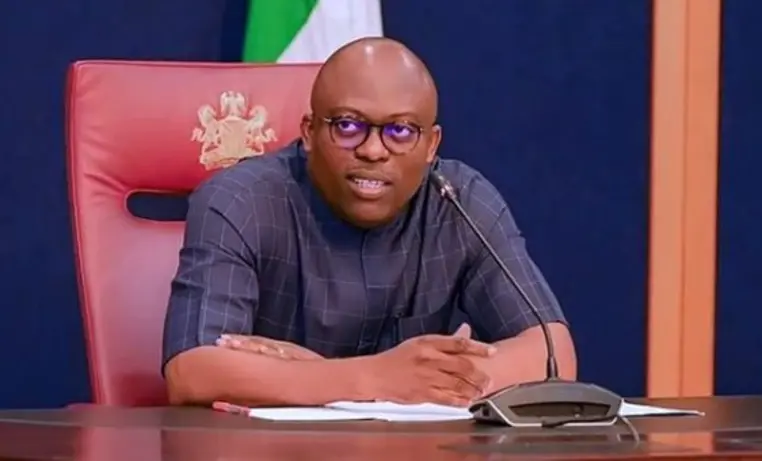
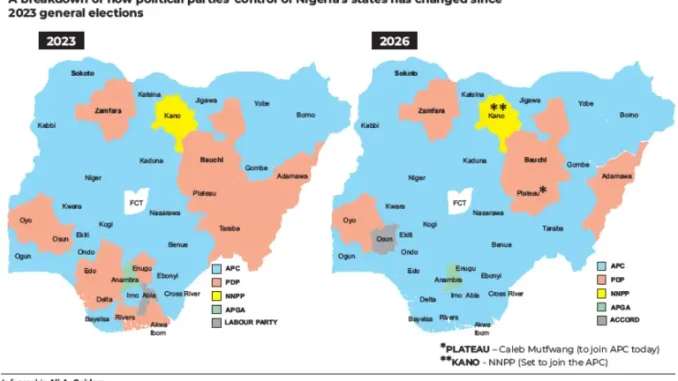
The All Progressives Congress (APC) is edging closer to controlling as many as 30 states, amid growing speculation that Kano State Governor, Abba Kabir Yusuf, may defect from the New Nigeria Peoples Party (NNPP) to the ruling party.
Although the governor has yet to make an official declaration, intensified consultations, closed-door meetings, and visible political realignments within Kano State have continued to fuel reports of an imminent move. Political observers say such a defection would significantly alter Nigeria’s political landscape, further consolidating APC’s dominance at the subnational level.
This was conveyed amid a broader wave of defections from opposition parties to the APC in recent months, a trend that has steadily strengthened the ruling party’s influence across several states. If Governor Yusuf eventually defects, the APC would move closer to achieving control of 30 states, reinforcing its position as Nigeria’s most dominant political platform ahead of future electoral contests.
Kano State remains a strategic political stronghold in the North-West, with one of the largest voting populations in the country. Any political shift by its sitting governor is therefore expected to have far-reaching implications, not only for regional alignments but also for national calculations ahead of 2027.
Read Also:
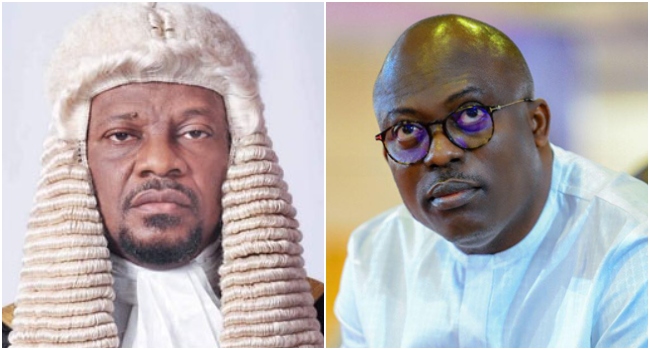
Rivers Assembly Initiates Impeachment Proceedings Against Governor Fubara, Deputy
Dr. Abdullahi Umar Ganduje: Encomiums for a Leader Defined by Service and Simplicity
Beyond Betrayal: The Real Politics Behind Abba Kabir Yusuf’s Calculated Move
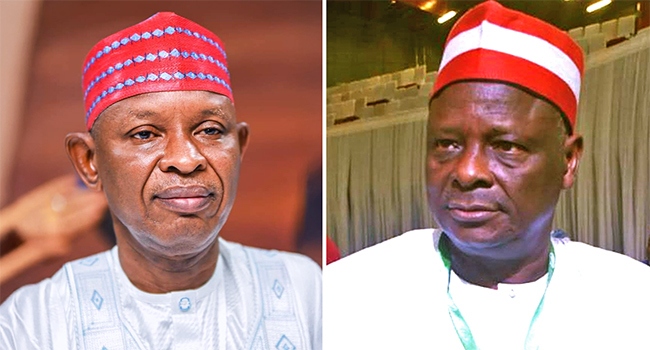
Beyond the arithmetic of party control, Yusuf’s reported defection preparations appear to mark a critical turning point, one that many observers describe as a threshold of no return from the political camp of his godfather, former Kano State Governor and leader of the Kwankwasiyya Movement, Senator Rabiu Musa Kwankwaso.
The unfolding situation has reignited deeper questions about the nature of contemporary Nigerian politics, whether it remains anchored in ideology and long-term conviction, or increasingly shaped by transactional calculations and shifting alliances. For supporters of the Kwankwasiyya movement, Yusuf’s possible departure represents more than a political realignment; it signals a potential rupture within a movement built on loyalty, symbolism, and grassroots identity.
For the APC, however, the prospect of absorbing Kano’s sitting governor is viewed as a strategic gain that could resuscitate its fortunes in the state, strengthen its internal structures, and recalibrate power balances ahead of future elections.
As the political chessboard continues to shift, Kano stands once again at the centre of a defining national moment where personal ambition, party supremacy, and ideological loyalty intersect in ways that may reshape Nigeria’s political trajectory.